A larger trade show booth gives your brand more space to make an impression. But making the most of that space requires more than simply adding displays, furniture and graphics.
A 30×30 trade show booth rental offers 900 square feet of exhibit space that can be designed around product demonstrations, conversations, brand storytelling and visitor engagement. When configured as an island exhibit, the booth can also be approached from four sides, creating valuable opportunities to connect with attendees throughout the show floor.
Whether you’re preparing for a major industry event or considering a larger exhibit for the first time, understanding how to plan your layout can help you make better decisions about design, functionality and budget.
At Diers Exhibit Group, we help exhibitors explore rental exhibit solutions that combine visual impact with practical event planning.
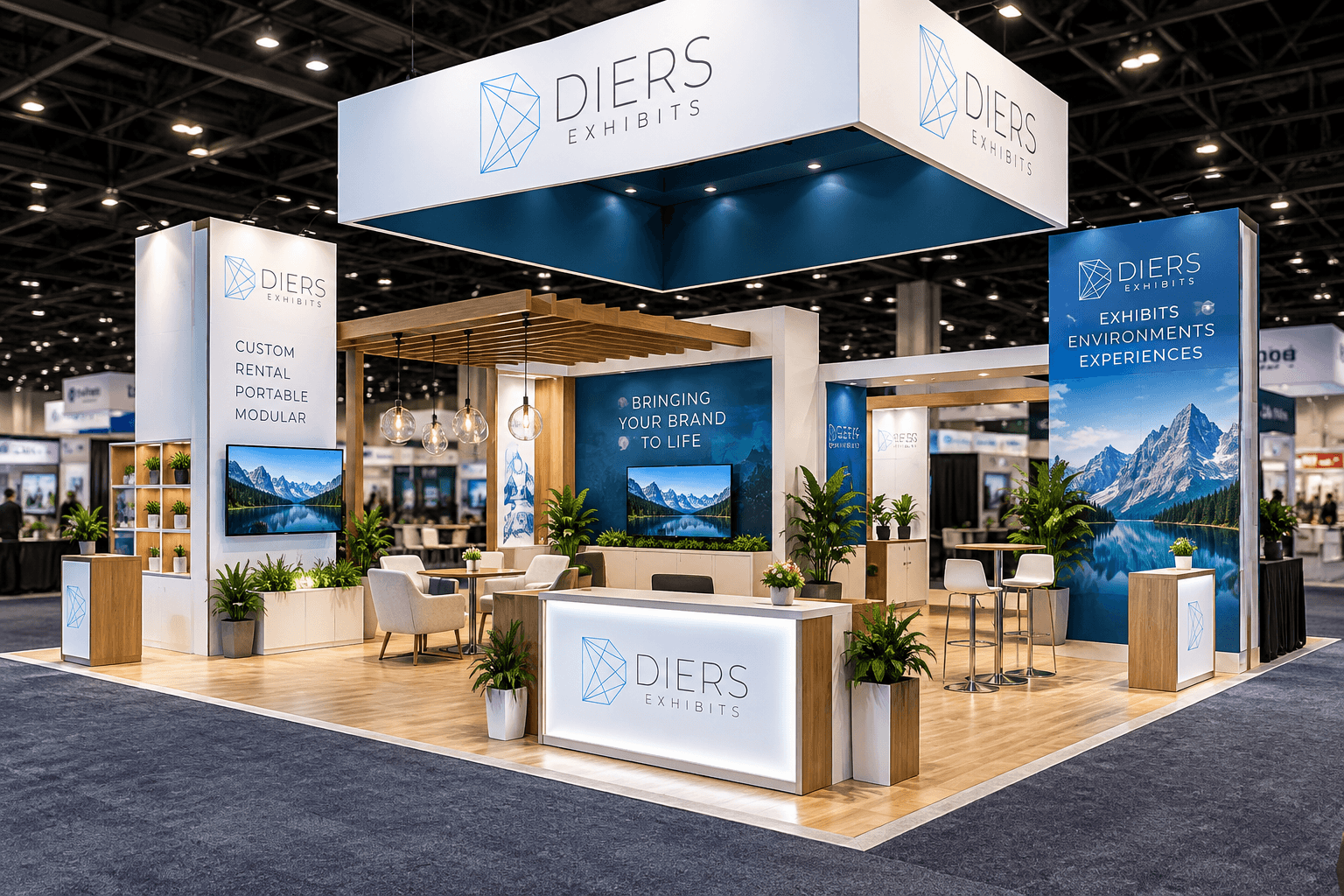
Illustrative 30×30 island exhibit concept.
What Is a 30×30 Trade Show Booth?
A 30×30 trade show booth measures 30 feet wide by 30 feet deep, providing 900 square feet of floor space.
This size is often suited to an island-style exhibit, where aisles surround all four sides of the booth. Unlike a traditional inline booth with a single primary entrance, an island layout can accommodate multiple points of entry and different visitor experiences within the same footprint.
Depending on the show’s rules and your exhibit goals, the space might include:
- A central branded display or architectural feature
- Product demonstration stations
- Seating for conversations with prospective customers
- Interactive displays or video presentations
- Reception counters and lead-capture stations
- Storage and staff support areas
The right combination depends on what your brand wants attendees to do when they enter the booth.
Why Choose a 30×30 Trade Show Booth Rental?
1. More Room for Meaningful Customer Interactions
One of the greatest advantages of a larger exhibit is the ability to create distinct areas for different activities.
For example, visitors might first encounter an eye-catching product display before moving to a demonstration area. Those interested in learning more can then meet with your team in a quieter conversation space.
Separating these functions can create a more organized visitor experience, especially during busy show hours.
2. Greater Flexibility for Brand Presentation
A 30×30 footprint allows exhibitors to consider design elements that may be more difficult to accommodate in a smaller booth.
These can include larger branded structures, multiple display zones, freestanding graphics and integrated video presentations.
The objective isn’t to fill every square foot. It’s to give your most important messages and products room to stand out.
3. Multiple Opportunities to Attract Attendees
With a typical island layout, visitors can approach from several directions.
That means your exhibit needs to make sense from more than one viewpoint.
Strategically placed graphics, signage and product presentations can help communicate your brand from different aisles while guiding attendees toward key interaction areas.
4. Flexibility Without Committing to a Permanent Exhibit
Renting can be an appealing option when your exhibiting needs change between events.
For example, you may want a larger footprint for an important industry show but use a more compact configuration at another event.
A rental strategy can provide flexibility in how you approach different shows without requiring ownership of every exhibit structure.
Explore our trade show booth rentals in Denver to learn more about customizable rental exhibit solutions.
Five Design Considerations for a Successful 30×30 Island Booth
1. Start With Your Primary Objective
Before selecting displays, furniture or graphics, identify what success should look like.
Are you introducing a new product? Building brand awareness? Scheduling meetings? Generating qualified sales inquiries?
Your objective should influence how the space is organized.
For a demonstration-focused exhibit, accessible presentation areas may be especially important. For a relationship-driven event, comfortable meeting spaces might deserve greater priority.
2. Plan Visitor Flow From Every Direction
An island booth can attract attendees from multiple aisles, but the layout must still feel intuitive.
Consider where visitors will first encounter your brand, how they will move between displays and where conversations can take place without blocking access.
Avoid placing oversized furnishings or structures where they create unnecessary congestion.
The goal is an exhibit that feels approachable, organized and easy to navigate.
3. Make Branding Visible Without Overcrowding the Space
Large exhibit graphics can communicate your brand quickly, but bigger isn’t always better.
A strong 30×30 booth design balances recognizable branding with clear messaging and enough visual space for the actual products or services being presented.
Consider using a consistent visual identity across reception counters, structures, graphics and digital presentations.
Attendees should be able to understand who you are and what you offer without having to read several paragraphs.
4. Account for Show Rules and Venue Requirements
Island booth regulations vary between trade shows and venues.
Before finalizing your design, confirm the event’s requirements for structure height, hanging signage, sight lines, electrical services, rigging and accessibility.
A configuration permitted at one show may need adjustments at another.
Reviewing these requirements early can help prevent unexpected design changes or additional service charges closer to the event.
5. Design for Real-World Setup and Logistics
A visually impressive exhibit must also work within the practical requirements of the event.
Consider installation and dismantling schedules, freight handling, electrical needs, storage and the timing of vendor services.
Coordinating these details during the planning process can help reduce unnecessary surprises once the show approaches.
For more information on the factors that affect exhibit budgets, read our Trade Show Booth Rental Cost Guide.
Renting vs. Buying a 30×30 Trade Show Booth
Choosing between a rental exhibit and a purchased custom booth depends on how frequently you exhibit, how much your requirements change and your long-term marketing goals.
A rental exhibit may be worth considering when:
- You want flexibility between different event sizes.
- Your exhibit design or branding changes regularly.
- You need a larger booth for a particular event.
- You prefer not to own and maintain all the exhibit components.
A purchased custom exhibit may make sense when:
- You exhibit frequently with relatively consistent requirements.
- You want greater control over long-term structural design.
- Your brand uses a signature exhibit concept across multiple events.
- Ownership fits your long-term exhibiting strategy.
Neither option is automatically the better investment. The right decision depends on your event schedule, project requirements and total costs over time.
If you’re exploring both approaches, Diers also offers custom trade show booth solutions.
What Should You Prepare Before Requesting a 30×30 Booth Rental Quote?
The more information you provide during the initial planning conversation, the easier it is to evaluate suitable exhibit options.
Start with these essentials:
- Event name and location: Where will the exhibit be installed?
- Show dates and deadlines: When must the exhibit be ready?
- Confirmed booth dimensions: Is the space exactly 30×30 and designated as an island?
- Branding requirements: What graphics, logos and visual assets are available?
- Products and demonstrations: What needs to be displayed or presented?
- Meeting and staffing needs: How many team members and visitors should the space accommodate?
- Budget range: What are your priorities and financial constraints?
- Additional services: Will you need freight coordination, installation, dismantling or other support?
Sharing this information early helps create a more productive design discussion and reduces the need for avoidable revisions.
Plan Your Next 30×30 Exhibit With Diers Exhibit Group
A successful 30×30 trade show booth is more than a larger display. It’s a thoughtfully planned space that helps visitors understand your brand and creates opportunities for meaningful interaction.
From layout and graphics to logistics and exhibit coordination, the right planning process can make a substantial difference in how your team experiences the show.
Diers Exhibit Group works with exhibitors to develop rental exhibit solutions tailored to their brand, event requirements and presentation goals.
Planning a 30×30 trade show booth rental or exploring a different exhibit size?
Start your trade show booth project and tell us about your upcoming event. Our team can help you explore the next steps.